Prime Video
Helping partners achieve lower operational dependence through self-service tooling
My Role
thanks To
Timeline
Context
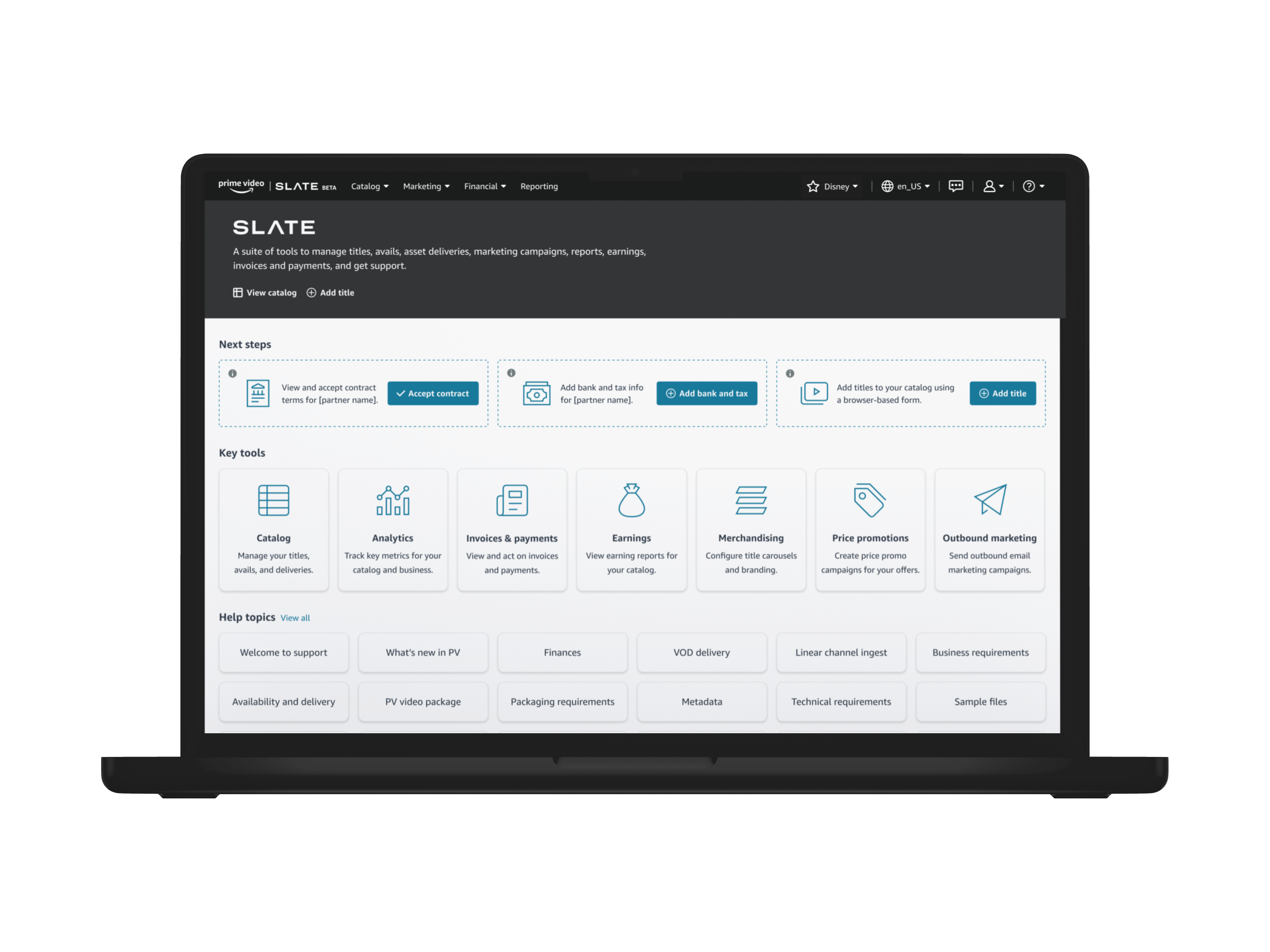
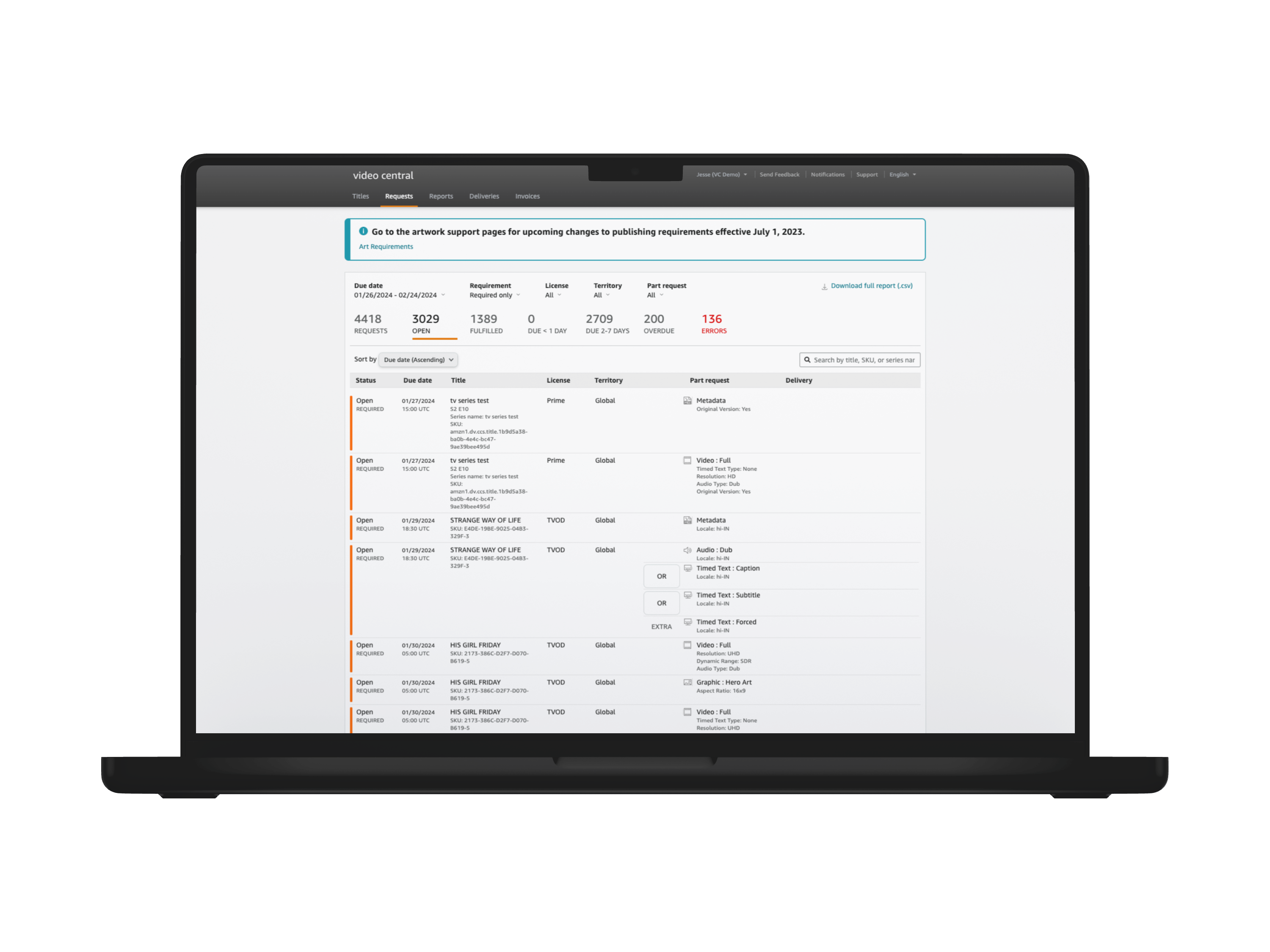
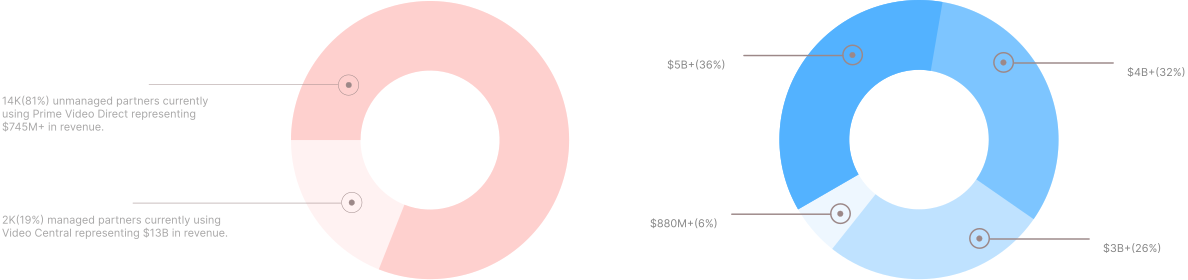
Prime Video’s content partners were split across two fragmented portals, Video Central (1,651 managed partners) and Prime Video Direct (14,619 self-service partners). While these systems supported a rapidly growing global supplier base, they delivered an inconsistent and operator-heavy experience, earning only a 6% favorability score in a survey of 2,300+ partners, significantly trailing industry benchmarks.
My focus
End-to-end design strategy across partner content operations and self-service tooling, research, design system governance, roadmap influence and cross-org stakeholder alignment across 12+ product areas.
End-to-end design strategy across partner content operations and self-service tooling, research, design system governance, roadmap influence and cross-org stakeholder alignment across 12+ product areas.
this is a test
Results
Revisiting the success metrics
+6
4.7
Outcomes
Success metrics
-67%
+203
+38bps
86 NPS
Outcome
50K+
43%
~95M
1.2
Outcome for IES for Amazon
fill in metric
fill in metric
fill in metric
fill in metric
Success Criteria
1+
4.5
Defining Goals
50%
+150
+280bps
80nps
The Journey
2. In-Session Experience:
- Desktop (customer)
- App (host)
Final Designs
.png)
Areas of Ownership
this is a test
Explore Marketplace
This included the Explore storefront, search, filters and detail pages.
Pre-Session
Helping customers get ready for their livestream with a dedicated detail page.
In-Session
Entering into a livestream via mobile device browser from the detail page.
Post-Session
Storing customers photos and purchased items after their live session.
Problems
this is a test
Customer Survey
From a launch survey, 78% of customers would "love to experience this. with friends and family"
Price
Private experiences have also come at a premium price, making them too expensive for customers (62% of responses).
Seller Growth
The 1:1 nature of Explore has also restricted seller growth
Why?
1. Low Conversion on Mobile
Conversion on mobile was .56% compared to 1.71% on Desktop. A key reason is not being able to consume experiences on mobile devices.
2. Traffic
76%+ of all Explore traffic came from mobile (mWeb and mShop).
3. Post-session survey
58% of survey respondents indicated they would like to consume experiences on a mobile device.

Understanding the problem
1. LEARN
Find out how customers use and interact virtually
Seeing the both the issues and stresses related to virtual dating will help provide insight into problems and possible solutions.
2. DEFINE
Understanding target market
This will help find what motivates and frustrates users. By identifying the target market will help to better understand and deliver a tool to fill users needs.
3. DESIGN
Building a solution
From our findings we can start to evaluate and build a product to fill those needs.
4. TEST
Validating the designs
Determining the success of the tasks that will include defining certain metrics(KPIs).
The Problem(s)
Partner Satisfaction
In a survey participants favored Netflix (30%) and iTunes Connect (28%). We lag competitors in reporting, real-time publishing status, and self-service troubleshooting. YoY: portal tech capabilities (-6.6%), reporting (-6%), tech support (flat).
Disparate Partner Portals
There exists limited feature parity between the two portals forcing VC partners to create and manage a separate PVD account to meet their business needs.
Over-Reliance on Operators
Managed partners primarily rely on Partner Operations Managers (POMs) to retrieve data on the health and publishing status of their PV catalog. A study survey indicated that 28.1% of POM’s time was spent on title level escalations
.png)
Business Opportunity
With 16K+ partners generating $14B annually, unifying the legacy platforms into Prime Video Slate represents an estimated ~$130M opportunity by reducing duplicated workflows, minimizing support escalations and decreasing over-reliance on POMs across the partner ecosystem.
Issues
Amazon App (mShop)
- Cannot launch an Explore experience directly from the Amazon App (mShop).
- Cannot link directly to outside browser or give direct content redirecting customer from browser to mShop (legal).
Supported Devices
- Operating Systems Supported - iOS & Android.
- Browsers Supported - Chrome and Safari.
- Tablet Models and Makes Supported (future).
Partner Ecosystem
Constraints
Fragmented Vision
Six-plus engineering teams with separate roadmaps and OKRs, and no single accountable thread for the new partner experience roadmap.
Misaligned Experiences
Two portals on separate tech stacks with different data sources running 5 different design systems. Partners and internal operators weren't seeing the same information.
Limited Visibility
Almost no insight into the competitor platforms partners were actively benchmarking us against.
What I did
This was an opportunity to help align teams, so I organized a two-day workshop in New York with our MGM+ partners. The insights we gathered helped us test assumptions, uncover opportunities and benchmark against competitors. Ultimately shaping our vision and laying the groundwork for the Voice of the Partner (VP) program.
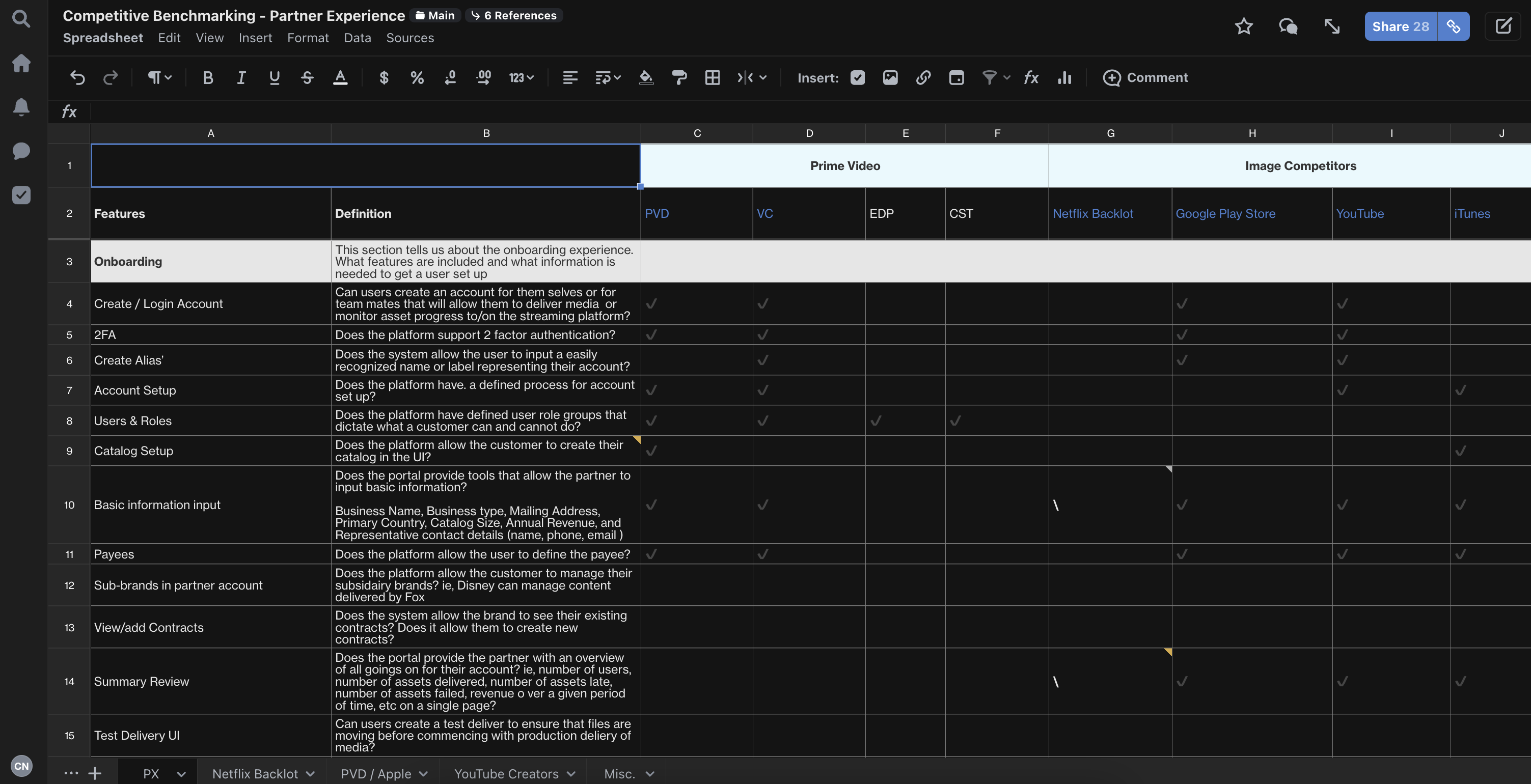
Adding Structure
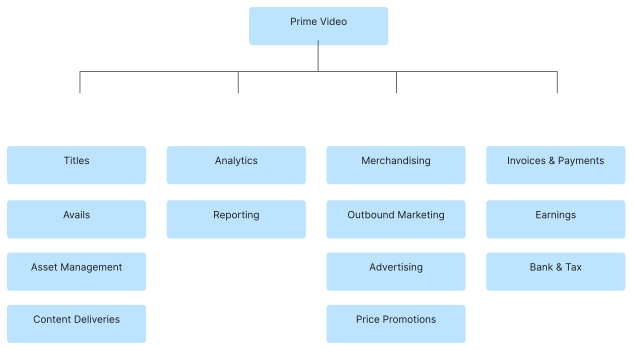
Leveraging the data gathered from partner research, I collaborated with internal teams and stakeholders to design a sitemap for the redesigned partner experience.
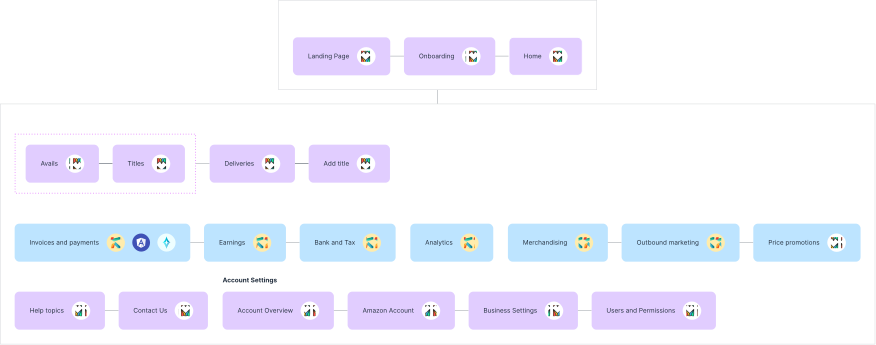
Adding Structure
Leveraging the data gathered from partner research, I collaborated with internal teams and stakeholders to design a sitemap for the redesigned partner experience.

Strategic Decisions
Three paths were evaluated:
1. Improve each portal independently
2. Merge into one
3. Build a unified platform with adaptive experiences by partner type
Working with stakeholders, and after some iterations, I redesigned a north star vision around the third option. One platform, one data source, one design system, but experiences that flex based on partner preferences.
Problem Focus
Following the initial partner working group, I conducted workflow analysis and identified a systemic bottleneck: the “Add Title” ingestion flow accounted for the majority of partner time expenditure and disproportionate POM involvement. Based on these findings and cross-functional alignment, we prioritized re-designing this experience as a core focus area in the new platform consolidation roadmap.
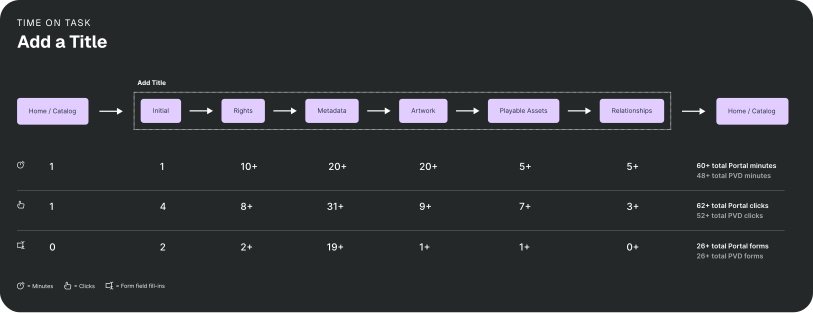
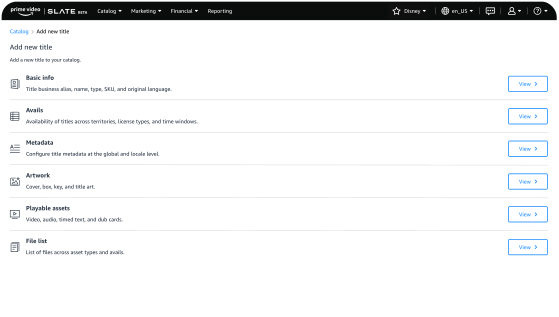
Add Title Explorations
Partners experienced severe frustration within the add title workflow, with unclear system state and fragmented navigation across legacy surfaces, resulting in increased task time and support dependency. To address this, I designed and iterated multiple directions with engineering and product, evaluating platform constraints and technical debt and narrowed to two viable approaches for partner testing and validation.
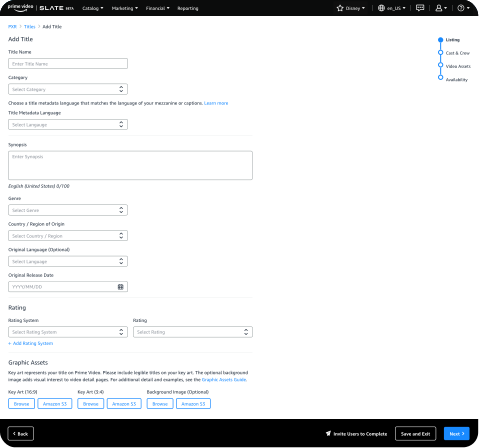
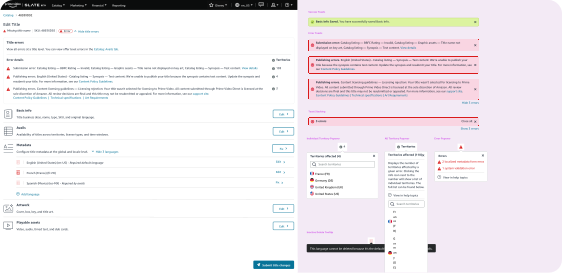
Failed Assets
Within this workflow, I dove deeper into failed asset ingestion issues, identifying a lack of clear error states, root causes and notifications that drove heavy reliance on POMs. I explored and designed in-context error surfacing and remediation patterns to improve transparency without increasing cognitive load while keeping scalability in mind.
.svg)
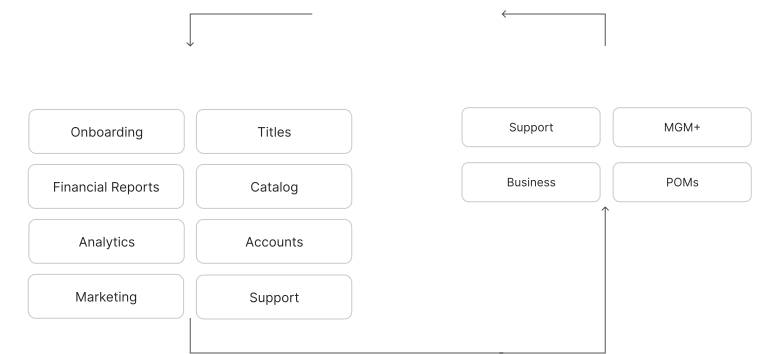
Failed Consensus
During early validation, I identified cross-team misalignment introducing fragmentation into the MLP roadmap. I established a cross-functional team(composed of stakeholders across the relevant orgs) as a structured feedback loop to centralize input, align on direction, validate assumptions and accelerate coordinated testing with PV partners.
Testing Results
Cognitive Overload
Testing revealed notification overload in the Hub Message Center, where high-volume uploads generated stacked, non-prioritized alerts, obscuring critical errors versus warnings and increasing partner time-on-task and remediation friction.
Poor Transparency
Error notifications surfaced highly technical system states without actionable remediation guidance, creating ambiguity and driving partner dependency on manual support for content clarification.
Workflow Friction
Issues arose when failure notifications are disconnected from the core task flow, increasing fragmentation, time-on-task and support dependency.
